Polar Bear
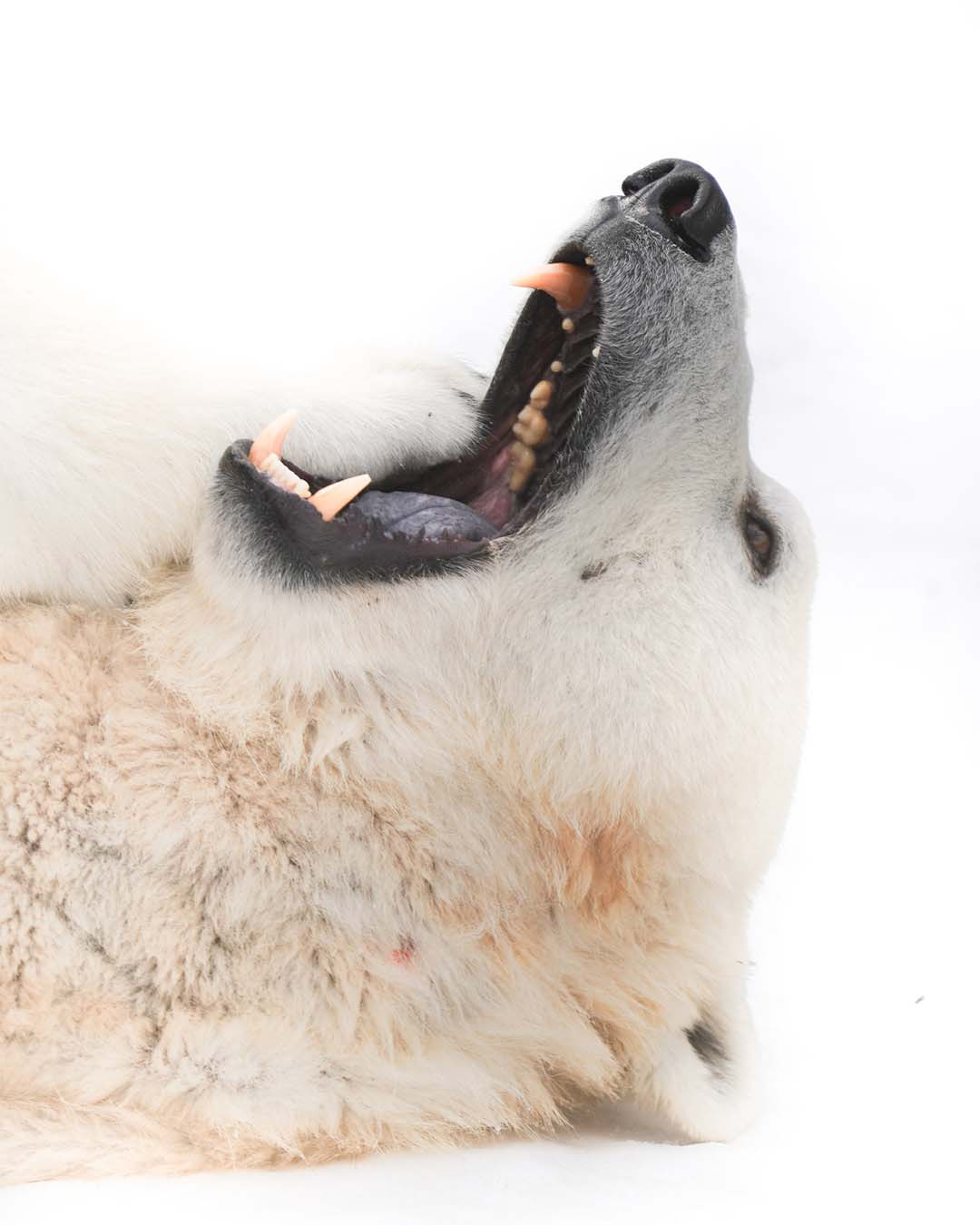
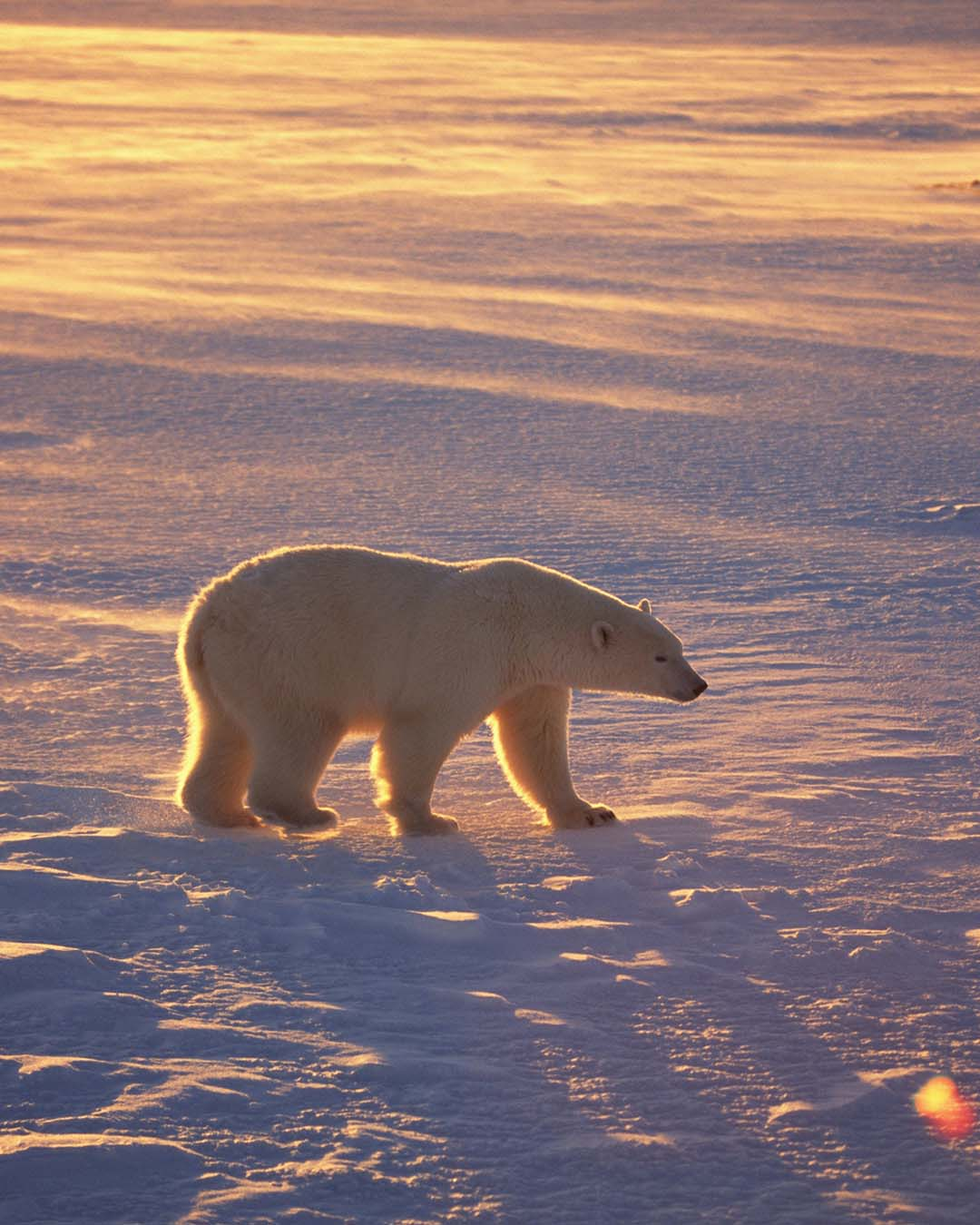
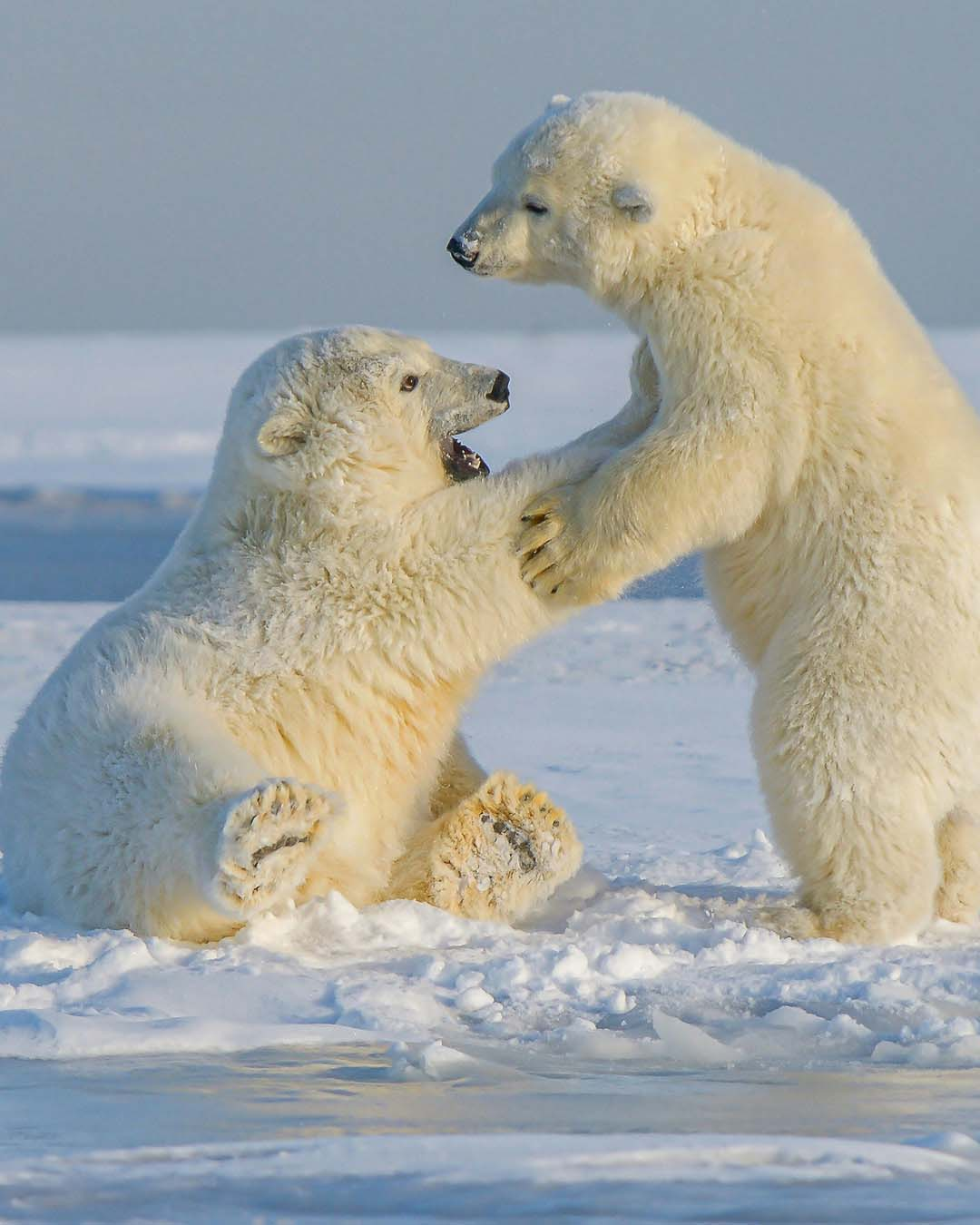
It’s probably one of the most recognisable animals on the planet. Its massive frame, thick white fur and black nose have become synonymous with Arctic wildlife. Built for life on ice, these powerful predators can weigh up to a whopping 700 kg and stretch over 3 metres from nose to tail. Their insulating fat and dense fur allow them to survive in temperatures as low as –40°C, while their large, slightly webbed paws make them exceptional swimmers.
Polar bears are apex predators, primarily hunting seals, but they’ll also scavenge carcasses or eat small mammals, birds, and vegetation when necessary. Despite their size, they move with surprising grace across snow and ice, blending into the frozen landscape.

Where they live
When you’re likely to see them
Polar bears can be seen year-round, though sightings are more frequent in spring and early summer when they hunt near ice edges. In late summer, they may be spotted along coastlines or river estuaries while fasting or waiting for sea ice to return.
Mating/nesting patterns/seasons
Mating occurs between April and May. After a delayed implantation, females give birth in dens during November or December, usually delivering one to three cubs. Cubs remain in the den with their mother for around three months before emerging onto the ice, learning essential survival skills under her watchful care.
Why it’s so special seeing them
They’re one of the strongest, most powerful predators on Earth. Every single Polar Bear encounter is nothing short of extraordinary.
Few animals are as perfectly adapted to their environment, but their environment is shrinking every day. Whilst we hope that they’ll be around for hundreds of years to come, it’s hard to predict how many polar bears we’ll have left as the rate of global warming increases. Having the opportunity to see them in the flesh is incredibly humbling.
Other wildlife