Marine Iguana
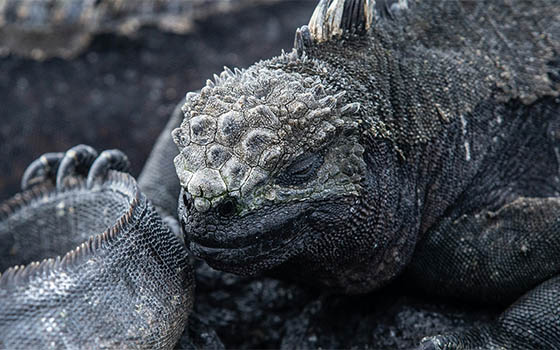
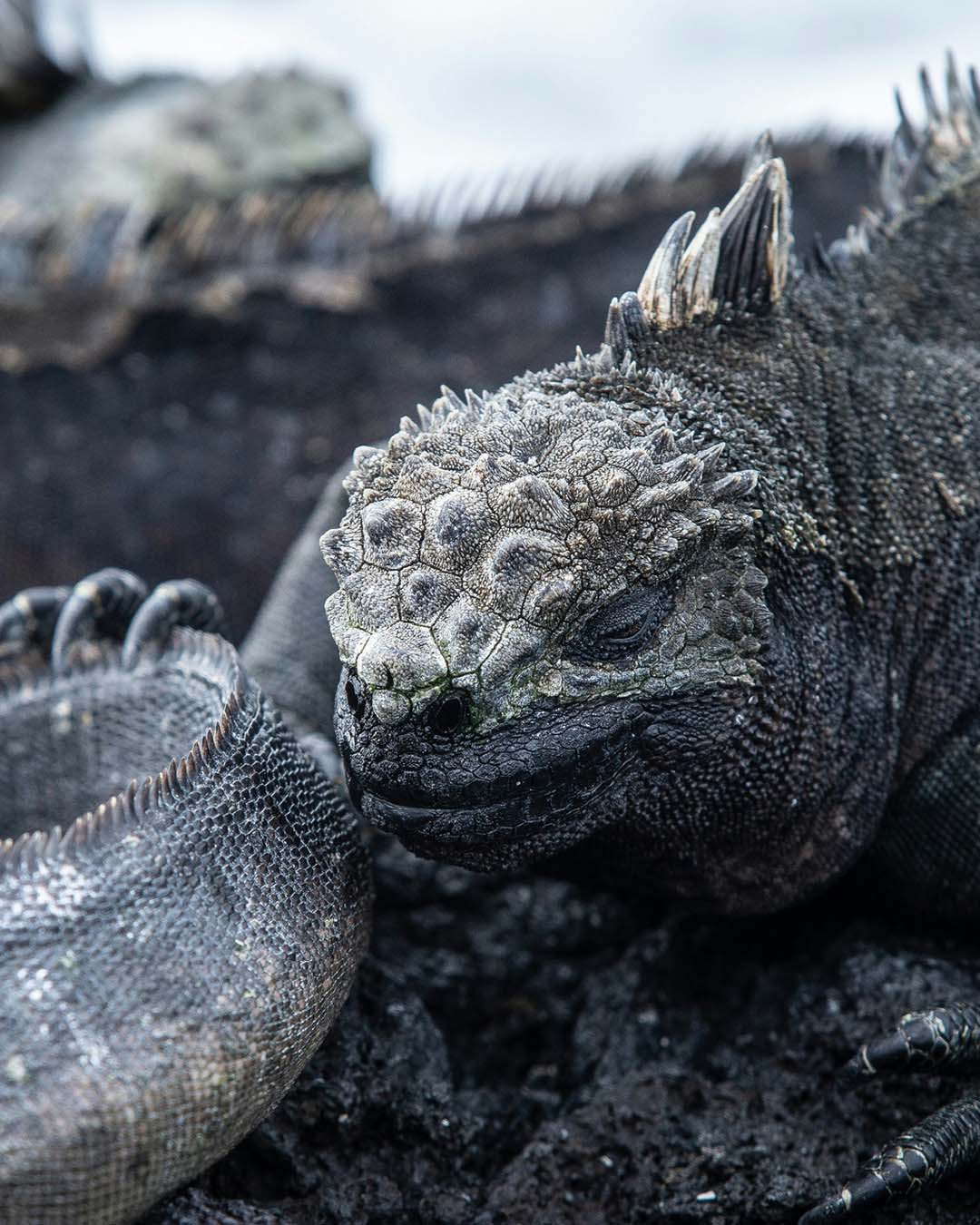
The marine iguana is the only lizard in the world adapted to life at sea. With their flattened tails, sharp claws, and salt glands, these iguanas dive into the ocean to graze on algae, an extraordinary adaptation found nowhere else. Males can grow over 1.3 meters long, while females are smaller but just as agile.
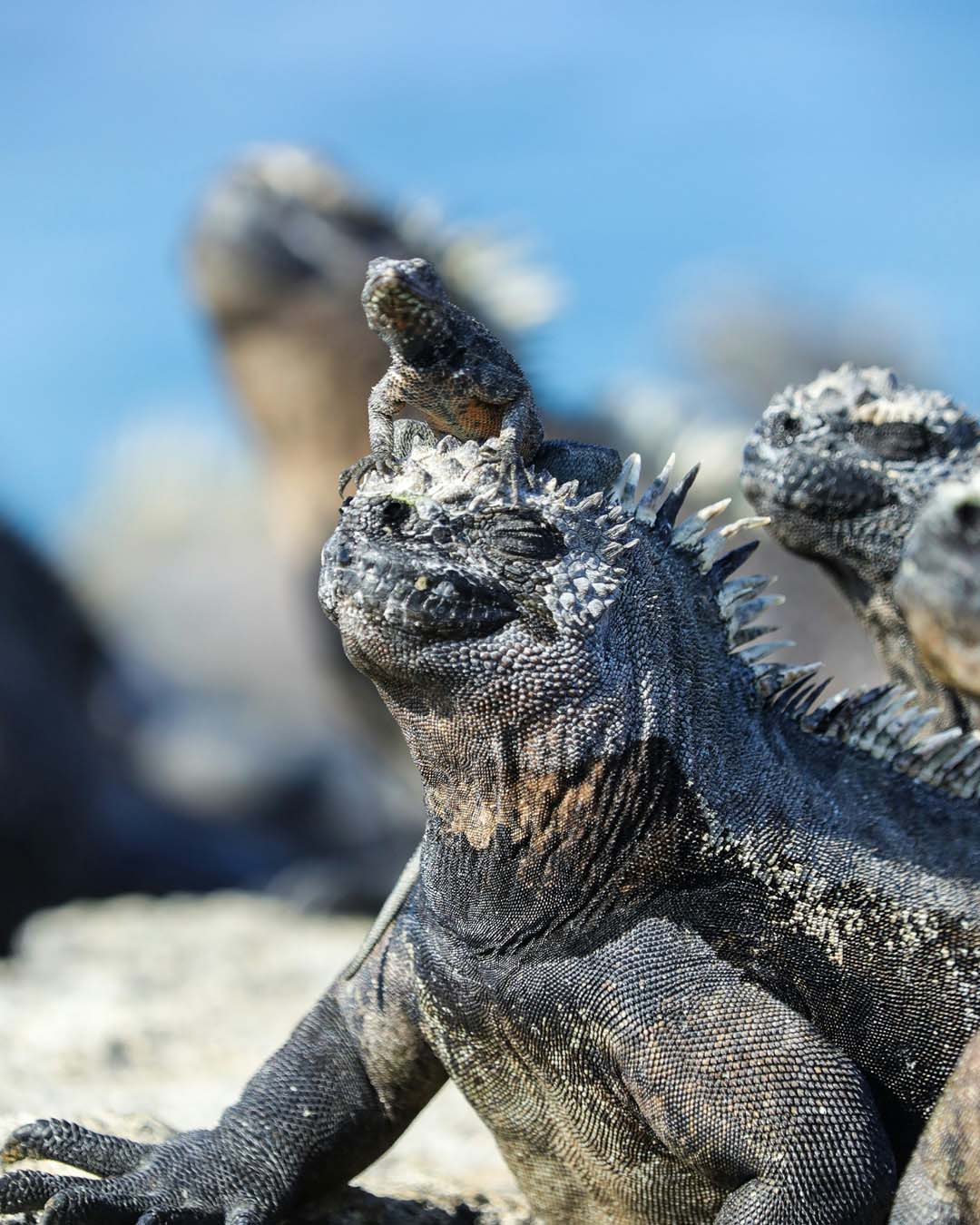
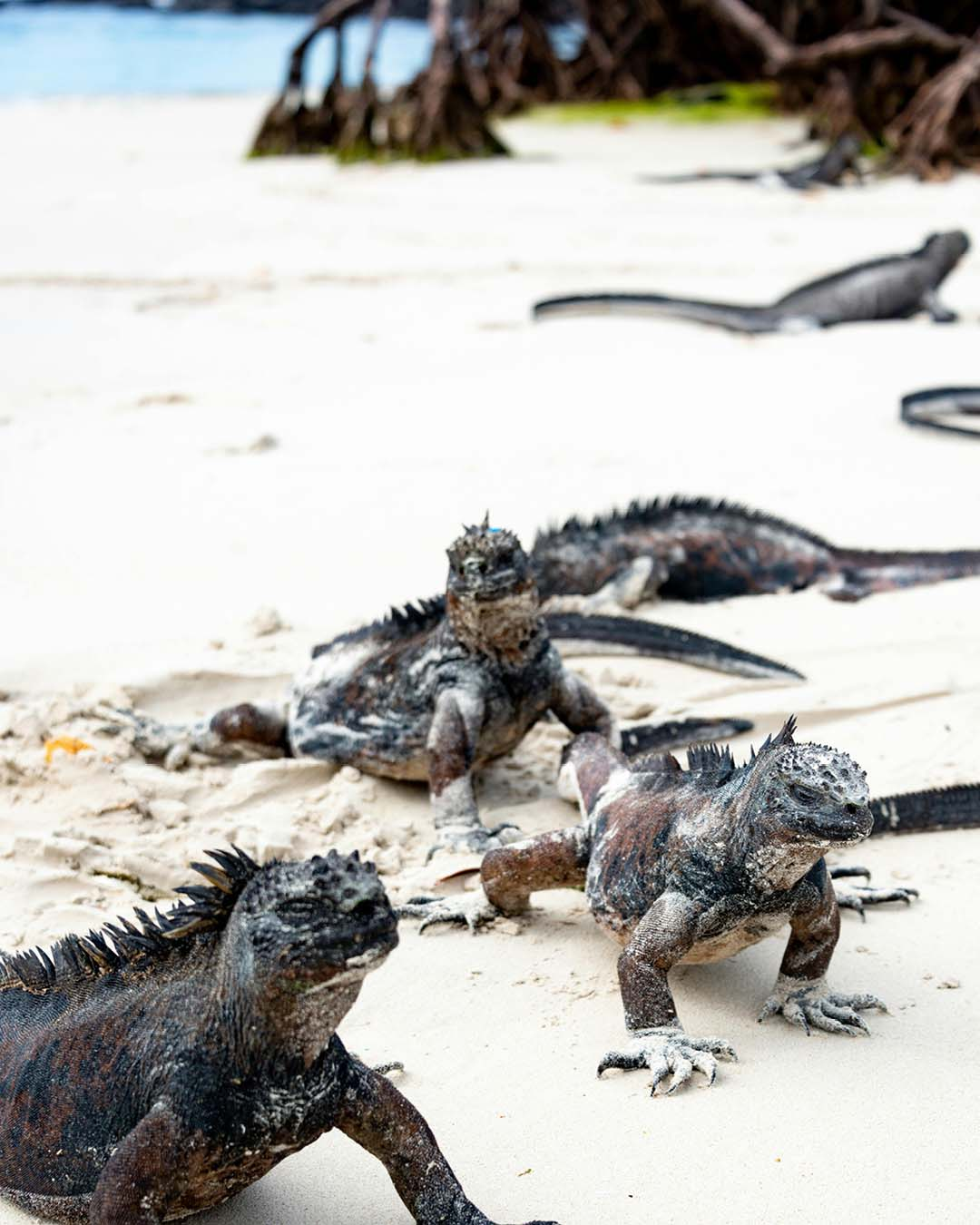
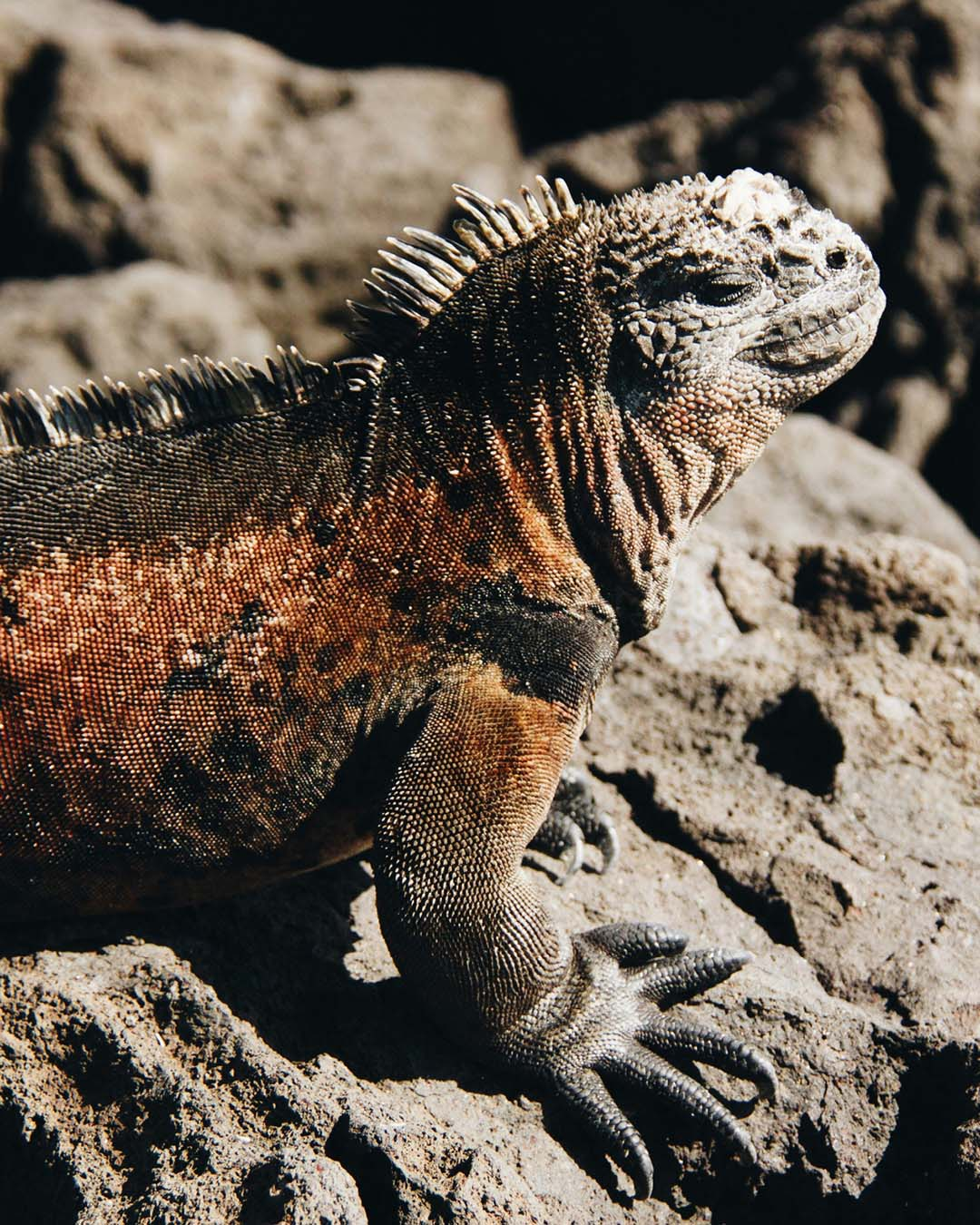
Often seen basking in dark clusters on volcanic rocks, their black scales absorb heat after chilly underwater foraging. Encounters with marine iguanas are common when sailing in the Galápagos archipelago, so expect to see at least a few of them. Watching them sneeze out salt spray or dive with surprising grace reminds travelers just how unique this volcanic ecosystem truly is.
Where they live
When you’re likely to see them
They can be observed year-round, as they spend much of their day basking on rocky shores. Expedition landings often coincide with low tide, when iguanas are actively feeding or returning from the surf, their bodies glistening from the water and encrusted with bits of seaweed.
Mating/nesting patterns/seasons
Marine iguanas breed during the dry season (typically January to March). Males fiercely defend territories, displaying bright colors and engaging in push-up displays. Females dig burrows in sandy or soft volcanic soil to lay eggs, which incubate for several months. Nesting sites are often close to expedition landing zones.
Why it’s so special seeing them
Marine iguanas really are a callback to the prehistoric. Their dragon-like features, blunt noses, and habit of “sneezing” salt give them an otherworldly quality.
Watching them dive effortlessly into the ocean, graze underwater, and then clamber back onto volcanic rocks to sunbathe is extraordinary. For many travelers, seeing them in large groups along Galápagos shores is a highlight of any Galápagos expedition cruise.
Other wildlife