
King Penguin
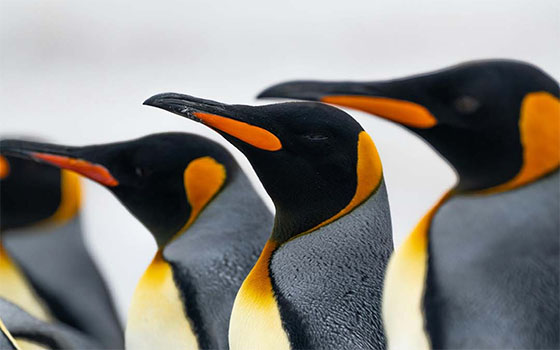
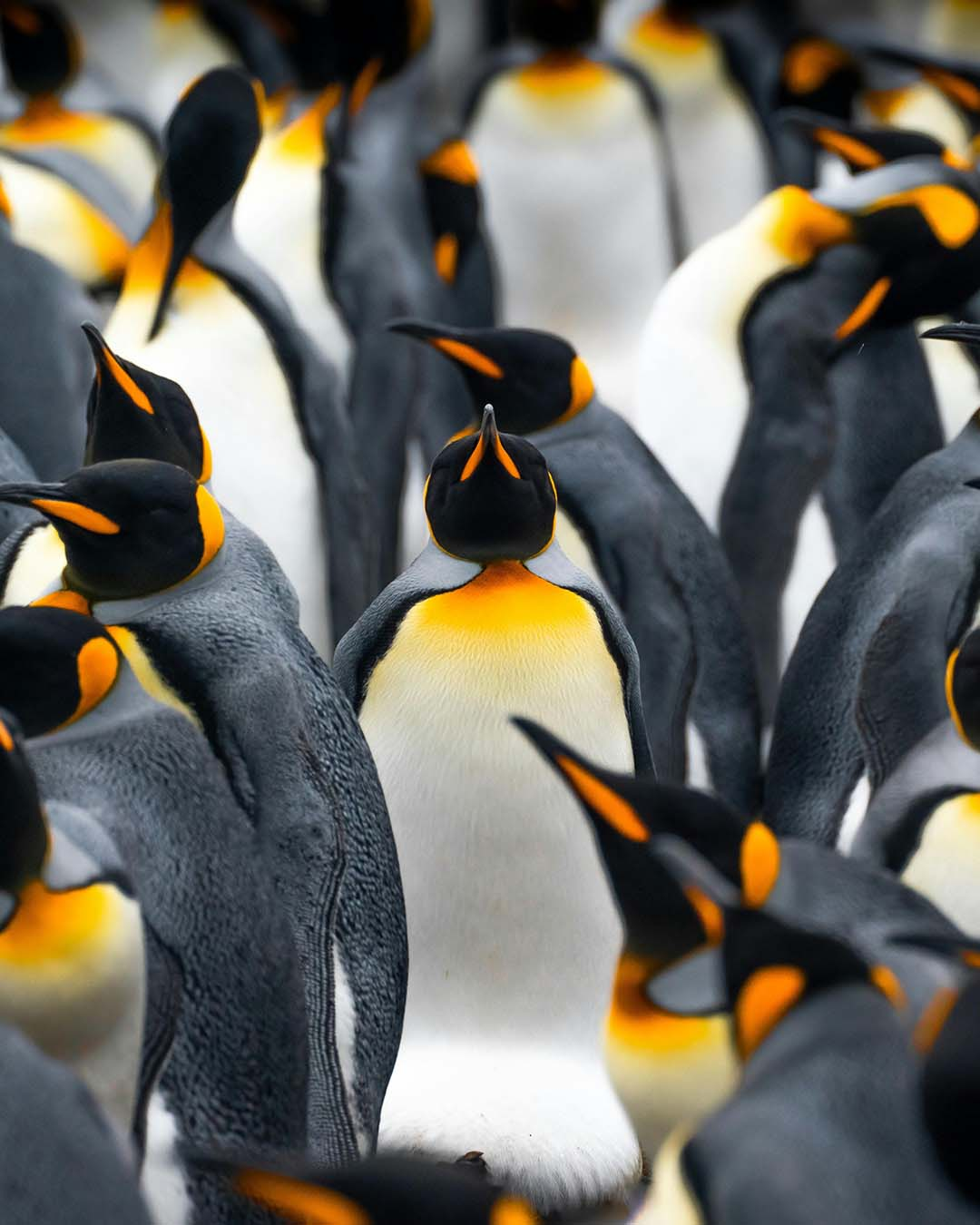
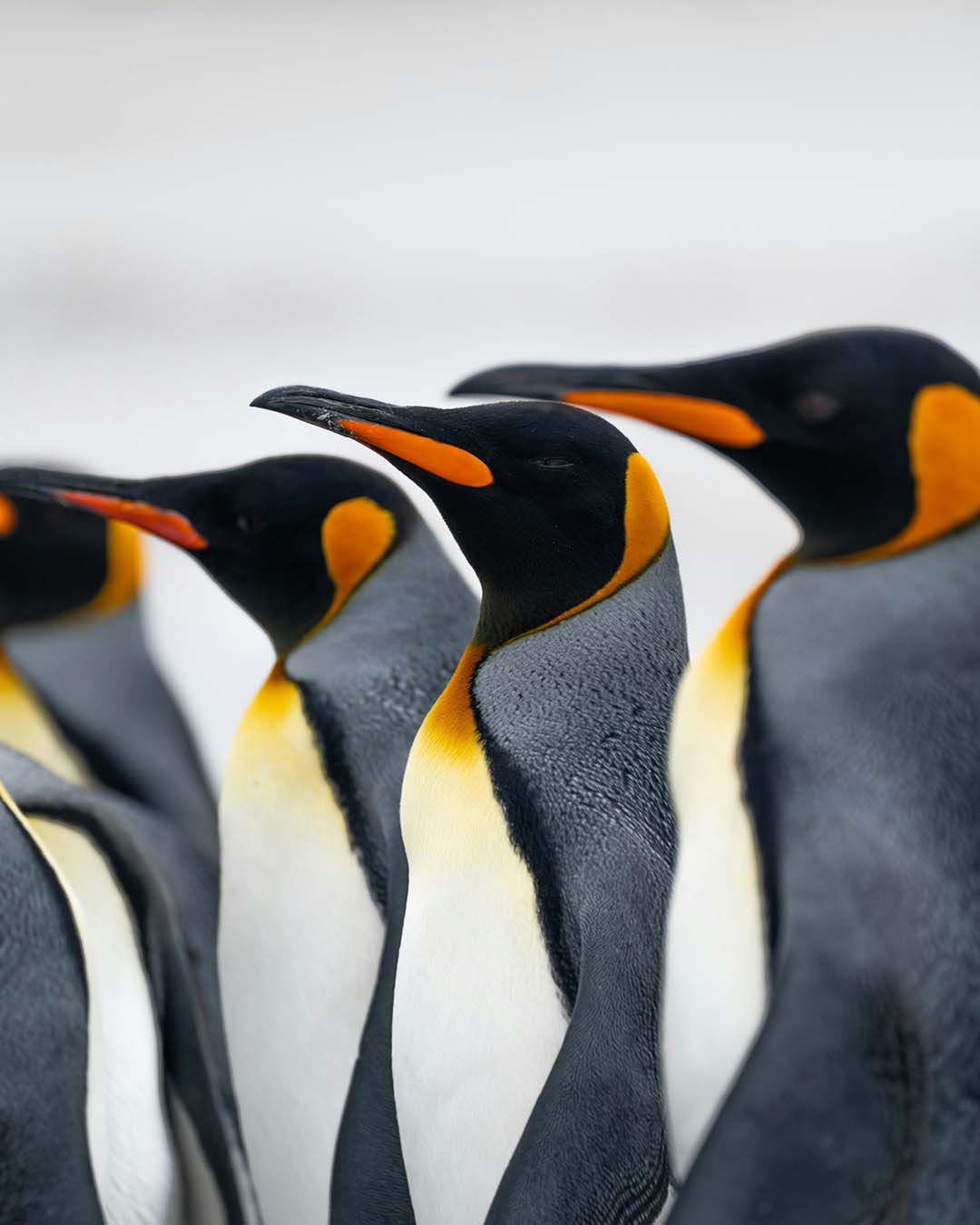
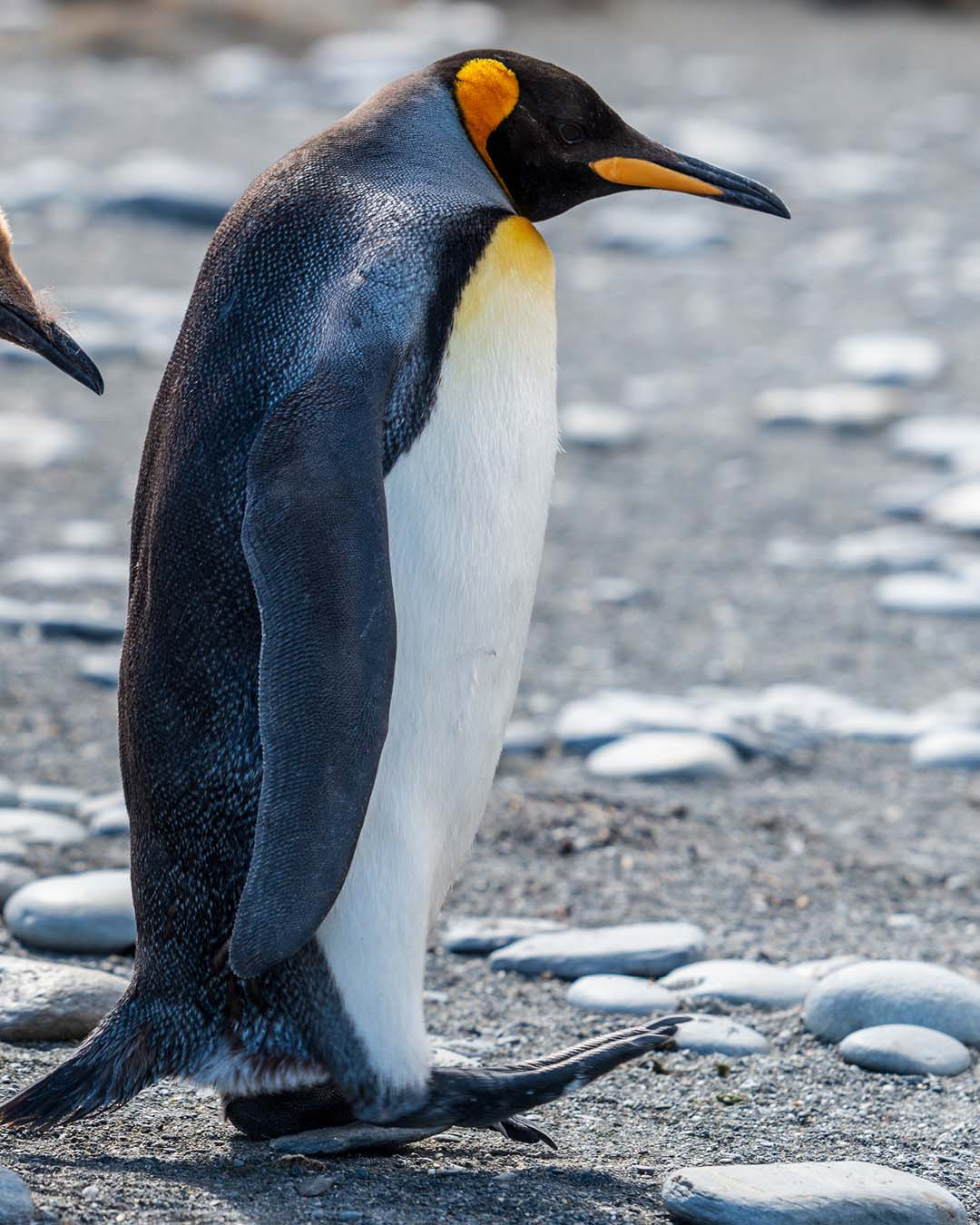
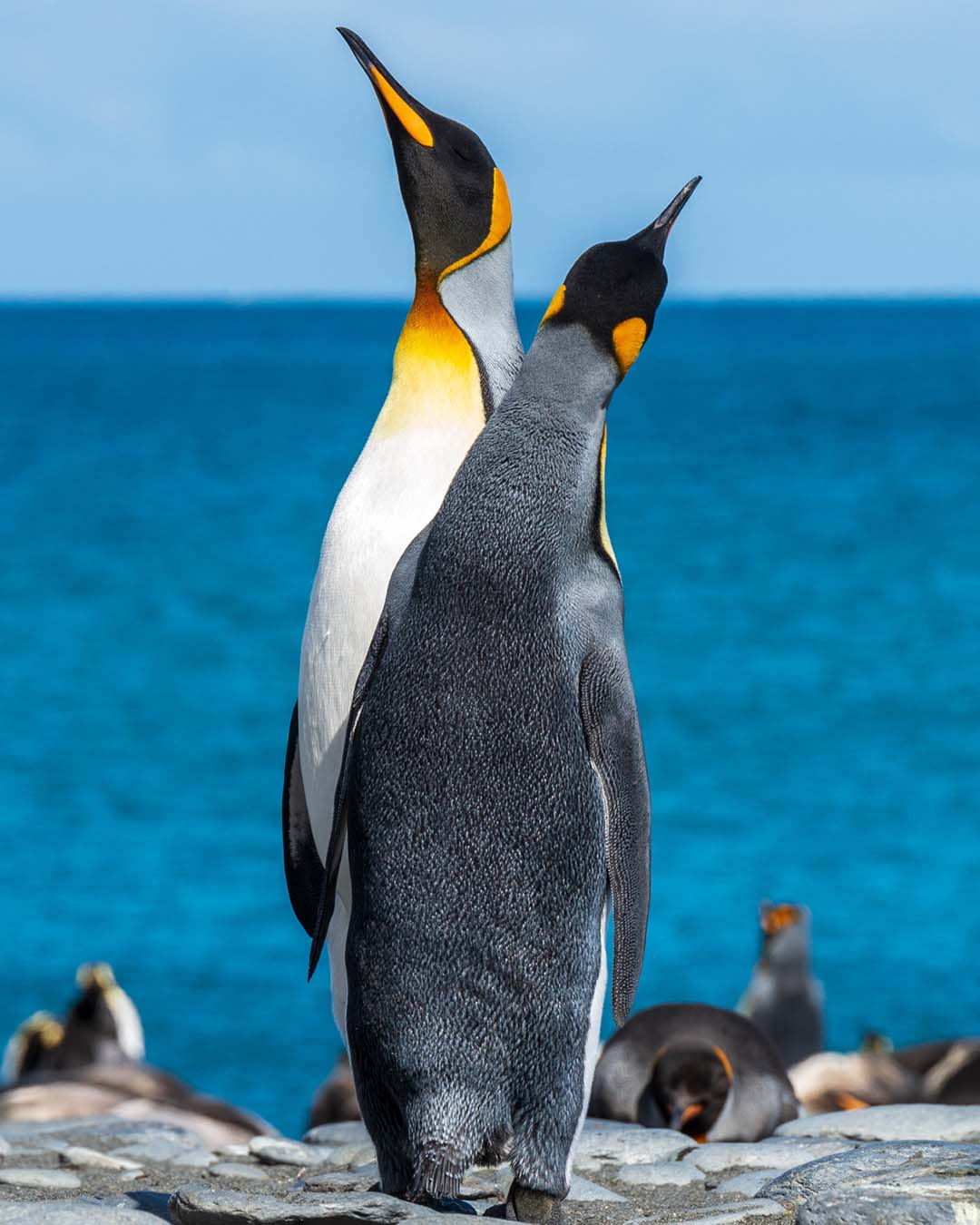
If the Emperor Penguin is Antarctic royalty, the King Penguin is its charismatic younger cousin. They’re just as regal, but way more approachable. Their appearance is characterised by sleek silver feathers with vibrant orange patches at the throat and beak. And unlike their more reclusive relatives, King Penguins are found in colonies you can actually visit, often numbering in the tens of thousands.
They’re the second-largest penguin species, standing up to a metre tall, and are a common highlight on luxury expedition cruises to the subantarctic islands. Their colonies are found on South Georgia or the Falklands so they’re way more accessible. Penguins as far as the eye can see. Sounds almost unreal, doesn’t it?

Where they live
When you’re likely to see them
King Penguins can be seen year-round thanks to their unusual breeding cycle, which spans over a year. However, the peak visitor experience is between November and March, when warmer weather coincides with both adults and fluffy brown chicks being present on the beaches in dazzling numbers.
Mating/nesting patterns/seasons
Unlike most penguins, King Penguins have a 14–16 month breeding cycle. This means eggs are laid at different times of year within a colony. Instead of building nests, they incubate their single egg on top of their feet, keeping it warm beneath a fold of skin until it hatches.
Why it’s so special seeing them
Our sense of scale is massively is pretty useless when watching things on television. This is why celebrities always look smaller in person, or stadiums look way bigger when you’re there in the flesh. The colonies of King Penguins we see on television look pretty big, but when you’re here in person, you’ll be in total awe at that moving mosaic of silver, black, and orange.
Other wildlife