Chinstrap Penguin
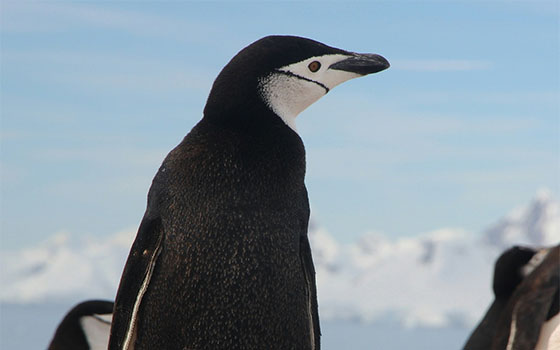
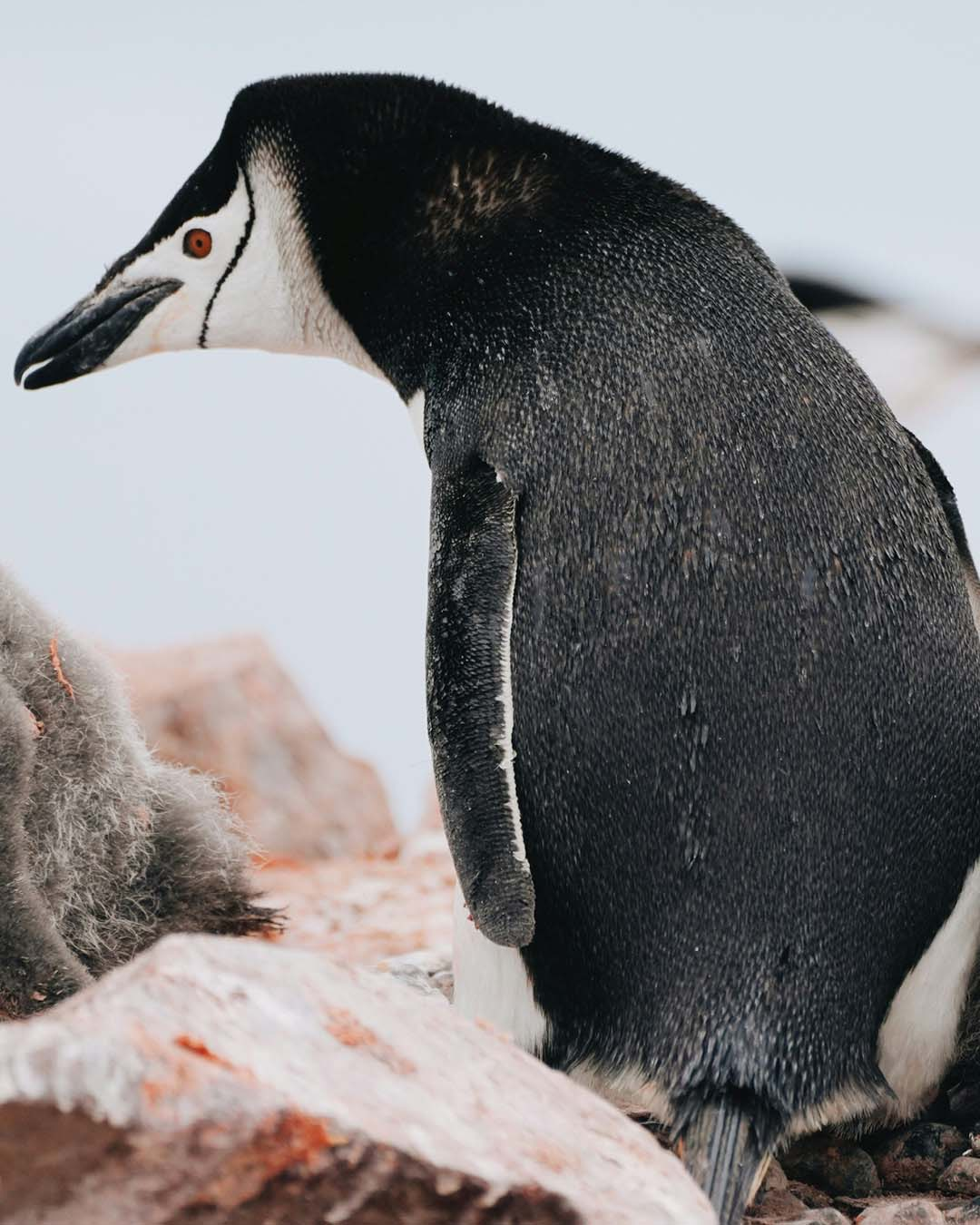
When they’re running towards you, chinstrap penguins are easily the most comical penguin species. That thin black line under the chin makes it look as though their faces have been painted on. The chinstrap penguin is closely related to two other penguins, the gentoo and the Adélie, whilst also being similar in size to Adélies. Adult chinstraps weigh 3.5 to 5.5 kg. Males and females look similar, but males are larger and heavier than females.
But if we’re talking about their character, they’re bold, brash, and impossibly agile. Chinstrap penguins populate the rocky shores and ice shelves of Antarctica, turning the toughest terrain into their personal playground. You’ll find colonies in the thousands, often on islands like the South Shetlands and Elephant Island, places often frequented by luxury expedition ships. Watching them leap, slide, and squawk their way across the ice is seriously addictive.

Where they live

When you’re likely to see them
Your best chance to catch Chinstrap colonies in full force is during the Antarctic summer, from November through February. This is when they’re busy breeding, feeding chicks, and showing off their epic climbing and sliding skills in sprawling, noisy colonies.
Mating/nesting patterns/seasons
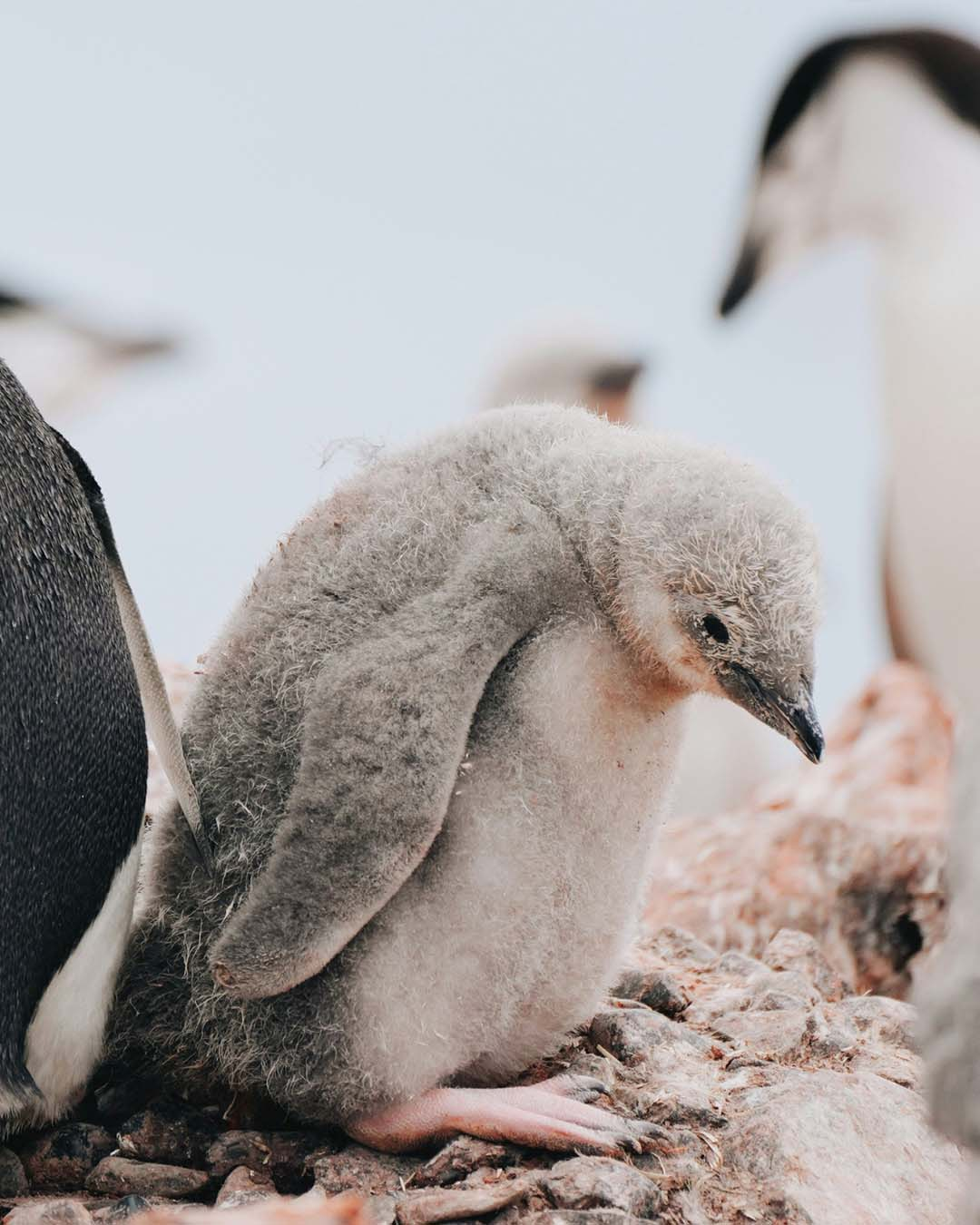
Chinstraps build simple nests from stones, often competing fiercely to grab the best pebbles. Both parents share incubation duties for two eggs and then switch to feeding their chicks. Their breeding season is packed, chaotic, and full of feisty squabbles.
Why it’s so special seeing them
Watching Chinstrap Penguins in the wild offers a fascinating insight into one of Antarctica’s most energetic species. Their agility on steep, rocky slopes, distinctive vocal calls, and lively social interactions will leave them as frontrunners for your new favourite animal. Seeing them in their natural habitat offers a deeper appreciation of the complex social structures that help them thrive in such a challenging environment.
Other wildlife