Walrus
Few Arctic animals are as instantly recognizable as the walrus, with its long ivory tusks, whiskered snout, and sheer bulk. These massive marine mammals can weigh over 1,000 kilograms, with males often towering above their companions on ice floes. Walruses use their tusks for more than display. They’re also used to help haul their immense bodies out of the water, break breathing holes in the ice, and establish dominance within social groups.
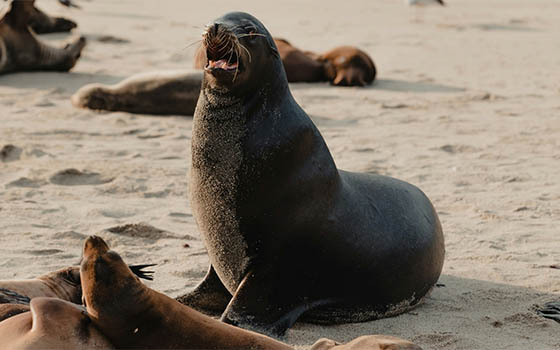
They are highly vocal and surprisingly social, often crowding together in massive numbers on beaches or drifting pack ice. When out on your expedition cruise, you’ll probably be surprised by their sheer size, but you’ll soon notice how easily they fit into the landscape of the Arctic.

Where they live


When you’re likely to see them
Walruses are visible year-round in the Arctic, but expedition cruises during summer and early autumn offer the best encounters, when sea ice retreats and large groups haul out onto coastal beaches. Travelers may see herds basking, resting, or slipping en masse back into the water.
Mating/nesting patterns/seasons
Breeding takes place in winter, often on pack ice, with males competing for harems using tusk displays and deep vocalizations. Calves are born in spring after a 15–16 month gestation. Mothers are highly attentive, nursing their young for up to two years while traveling with the herd.
Why it’s so special seeing them
Seeing a walrus herd is like watching a deleted scene from Ice Age. They’re almost prehistoric with their massive size and huge tusks, and their social nature surprises most expedition cruise guests the first time around.
Seeing them up close is also a reminder of the delicate balance of Arctic ecosystems, as walruses depend heavily on healthy sea ice and rich seabeds. For travelers, the chance to witness these tusked giants in their natural realm is both humbling and moving.
Other wildlife