Leopard Seal
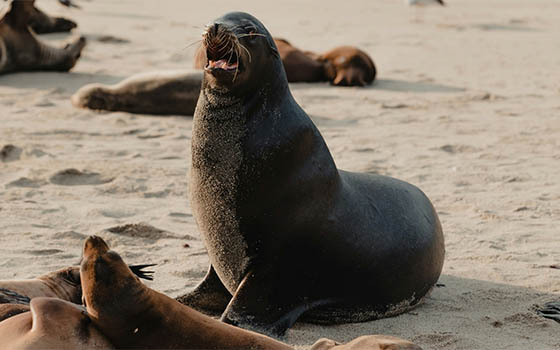
Named for it’s lighter colour and dark spots, the Leopard seal is Antarctica’s apex pinniped predator, instantly recognisable by its long, muscular body, reptilian head, and impressive jaws lined with sharp teeth.
Measuring up to 3.5 metres and weighing as much as 600 kg, it’s second only to the southern elephant seal in size among Antarctic seals. They do, however, have one natural predator, the orca. So long as they can avoid orcas, Leopard seals can live to around 25 years.
Unlike most other seals, leopard seals are solitary hunters, renowned for their power and stealth. Their diet includes penguins, fish, squid, and even other seals, though their specially adapted teeth also allow them to filter-feed on krill. Despite their predatory reputation, they are also known for moments of curiosity toward humans and vessels. One of the most intriguing examples of their curiosity towards humans can be seen through their attempt at feeding humans.

Where they live


When you’re likely to see them
They are most visible during the Antarctic summer, when sea ice retreats and penguin colonies are active. Luxury expedition cruises to Antarctica often provide sightings of leopard seals resting on ice floes or patrolling waters near penguin rookeries, making encounters both likely and thrilling.
Mating/nesting patterns/seasons
Mating takes place in the water during December and January. After a gestation period of about 11 months, females give birth to a single pup on the pack ice. The mother nurses the pup for around four weeks, after which it quickly becomes independent.
Why it’s so special seeing them
Witnessing a Leopard seal in the wild is pretty staggering. You know how deadly and powerful they can be, but when you see all 500+ kg of them cutting through the water, you’ll still feel awe and surprise. Watching them hunt penguins near colonies is a dramatic reminder of the Antarctic food chain, while their occasional curiosity toward boats will leave you falling in love.
Other wildlife